


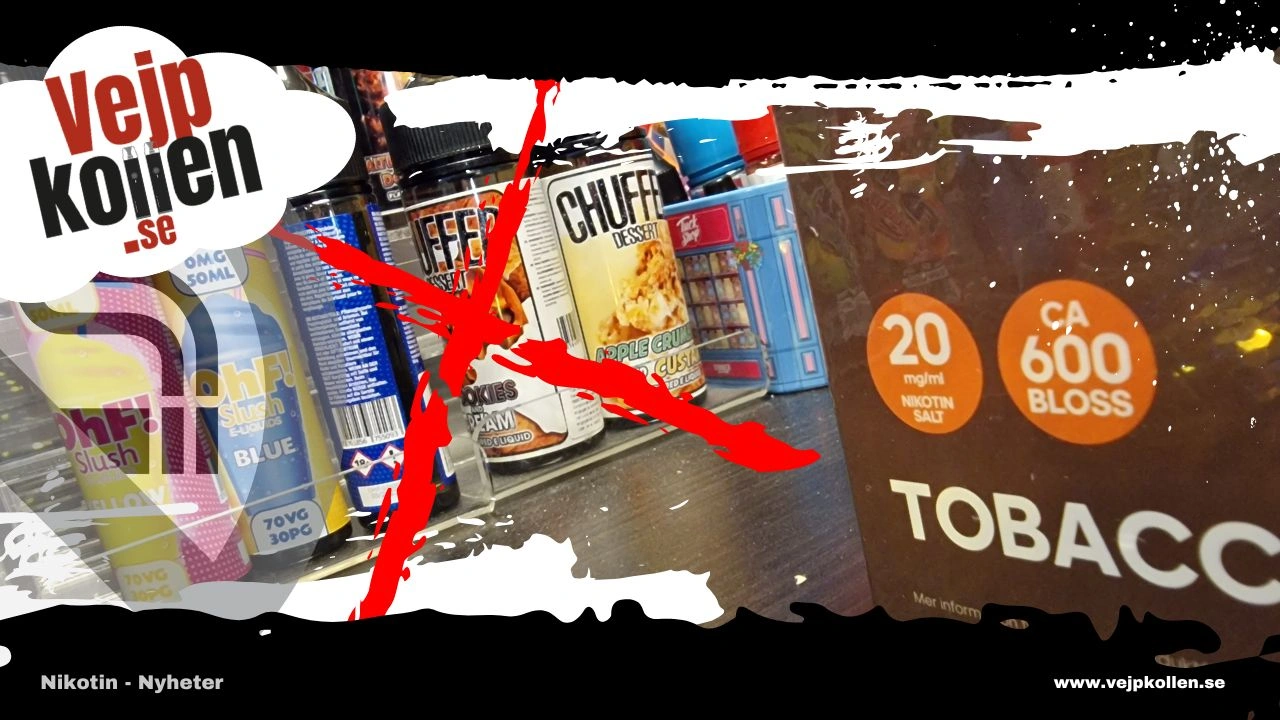
New Dutch data shows that the range of vejp products has changed significantly following the country’s flavour ban. The number of new products notified for the Dutch market has fallen by 61 per cent since 2020, whilst tobacco-flavoured products have become more common. At the same time, other studies show that many vejp users continue to use flavours that are no longer permitted for sale in the country.
Since January 2024, only artificial tobacco flavours have been permitted in e-liquids sold in the Netherlands. Similar rules have been in place for some time in countries such as Denmark.
Researchers at the Dutch National Institute for Public Health and the Environment (RIVM) have now analysed how the range of products has changed in the years surrounding the ban.
The study, published in the journal Tobacco Control, is based on data from the European product register, EU-CEG. The researchers have examined e-cigarette products notified for the Dutch market between 2020 and 2025 and, amongst other things, compared the flavourings contained in the products.
61 per cent fewer new products
In 2025, 61 per cent fewer new vejp products were notified than in 2020. At the same time, the proportion of new products containing only flavourings permitted under Dutch regulations increased by 38 per cent. Products containing flavourings that are no longer permitted fell by 56 per cent.
The researchers note that this trend is in line with the stated aim of the flavour ban: to make vejp products less appealing, whilst ensuring that these products remain available to smokers who wish to use them as an alternative to cigarettes.
However, the study is based on products that have been notified for the Dutch market. Changes in usage amongst the general public are not included in the analysis.
Four out of ten reported a reduction in vejping
That question, however, was examined in another study from the same research group, published earlier this year.
In the study, RIVM researchers asked 1,005 people who had used e-cigarettes prior to the ban on flavoured e-cigarettes about their usage following the introduction of the regulations. The participants comprised 548 people aged between 13 and 24 and 457 adults.
Around 40 per cent said they were vejping less following the ban. Of that group, 22 per cent had stopped completely.
At the same time, many participants continued to use flavours that are no longer permitted for sale in the Netherlands. Among those who still used such products, 36 per cent stated that they had bought them in high-street shops abroad.
Six per cent of all participants also stated that they had started smoking cigarettes again and attributed this themselves to the flavour ban. However, overall cigarette smoking amongst the participants fell following the ban, and the researchers therefore observed no increase in smoking at group level.
Purchasing flavours outside the Netherlands
Similar questions were asked in a survey carried out by the Dutch user association Acvoda in August 2024.
The organisation surveyed 907 Dutch vejp users about their experiences following the ban on tasting. The survey is based on self-recruited participants and is not a representative population study.
A large proportion of participants stated that they continued to use flavoured products by buying them from other countries or online. In their responses, participants also described how they had reverted to cigarettes after their previous vejp products had disappeared from the Dutch market.
According to Acvoda, few participants had switched to e-liquids with the tobacco flavours that are still permitted.
Researchers are calling for more data
The researchers behind the new RIVM study note that further studies are needed to investigate how the flavour ban has affected, amongst other things, the appeal of the products, consumer behaviour and sales.
EU-CEG data shows that fewer new vejp products are being notified for the Dutch market and that a larger proportion of them comply with the new flavouring regulations.
At the same time, a previous RIVM survey shows that some users have stopped or reduced their consumption of vejp, whilst others continue to buy flavoured products from outside the Netherlands. Acvoda’s survey also points to the continued use of flavoured products via other sales channels.
However, it is not possible to determine from the product register how total consumption of e-cigarettes has changed. Nor is this something that the researchers behind the new study have investigated.


